The Impact Storytelling Collective opens 9 November. Founding members join free.
Ethics
The story nobody asked you to tell
Most organisations ask how to tell a story and never ask whether they should. Three photographs from a London march, and the question to ask before you publish.

Most organisations spend a lot of time on how to tell their stories. Far fewer stop to ask whether a story should be told at all.
That question matters most when the pressure to produce content is high. Grant reports need case studies. Websites need stories. Social media needs posts. The easiest story to tell is usually the one already in front of you, whether or not the people in it asked for it to be told.
This post is for anyone who decides which stories get published, in charities and in CSR and social impact teams.
What I didn’t photograph
In March 2026 I stood on a pavement in central London as the Million Women Rise march came through. I was there as a supporter, an ally and a documentary photographer. I had my camera, I had access, and I had a platform to share whatever I captured.
Some of the most important decisions I made that day were about what not to photograph.
The march was led by Black and Global Majority women calling for an end to violence against women and girls. The space belonged to them. My role was to witness, to document where it was right to, and to amplify rather than interpret.
Three photographs, three decisions

Leadership, not need. The first image shows three women playing djembe drums as they lead thousands of people down Regent Street. They’re setting the rhythm of the whole march. Nothing about the picture asks you to feel sorry for them.
When your organisation photographs the people you serve, ask: does this show them as they are, or as we need them to look to make our funding case?
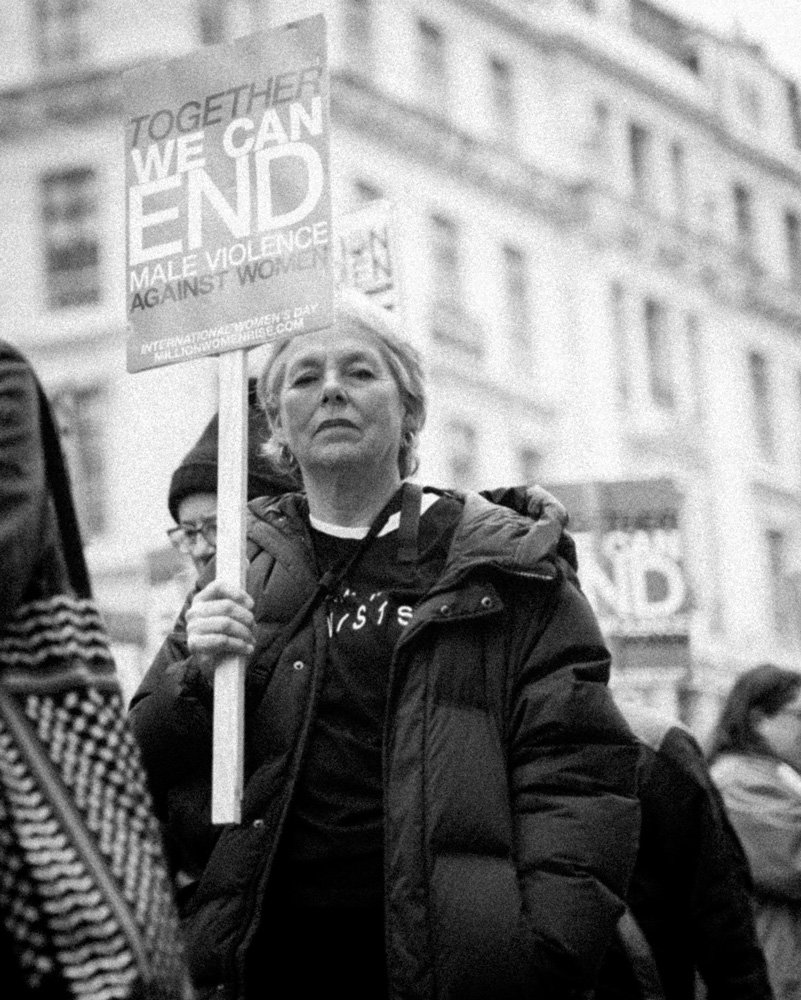
A chosen photograph. A woman holding a sign saw me raise my camera and looked straight back. She chose to be in the picture. Her directness is the story.
How many of the stories your organisation tells were chosen like that by the person at their centre?

The whole crowd. I didn’t look for one face to carry the story of the whole march. That would have reduced thousands of people to a single spokesperson. This picture is deliberately collective.
When you tell your organisation’s story, are you reaching for one neat narrative because it’s easier, when the truth is wider and more powerful?
Convenience isn’t consent
The stories that cause the most harm are usually told with good intentions, by people who never asked first.
None of the pressure to produce content is malicious. But a story that exists because the calendar needed filling is a very different thing from a story that exists because a person or community wanted it told.
“
Who asked for this story to be told?
If you can’t answer that clearly and honestly, the story isn’t ready.
Ask for: every story to name who asked for it to be told, or who agreed to it, before it’s scheduled.
Three questions before you publish anything
They started as questions I ask before raising a camera, and they work just as well for written stories, case studies and reports.
Why am I telling this now? Because it matters, or because there’s a gap to fill?
Would the person in it recognise themselves? Would they feel treated with care, or reduced to a symbol?
Is this mine to tell? Being there, with a camera or a notebook, doesn’t make it your story.
Six questions to ask before your next story goes out
Who asked for this story to be told?
Who agreed to it, and for which uses?
Would the person in it recognise themselves?
Are we showing them as they are, or as we need them to look?
Are we flattening many voices into one?
If we didn’t need the content, would we still tell this story?
Where to start this week
Look at the next three stories in your content plan. For each one, write down who asked for it to be told. If the honest answer is “we did, because we needed something”, pause it and talk to the people in it first.
If you’d like help deciding which stories to tell, and how, for your programmes and partnerships, that’s part of my storytelling consultancy.
Questions people ask
How do we know if a story is ours to tell?
Ask whether the people at its centre wanted it told, and whether they’d recognise themselves in it. If you’re telling it only because you were there, it may not be yours.
What if the people in the story agreed but didn’t ask for it?
Agreement matters, but check how it was given. If they agreed because they felt they owed you, slow down and ask again in a way that makes saying no easy.
Does this apply to photography at public events?
Yes. Being in public doesn’t mean someone wants to be the face of your campaign. Think about who the space belongs to and what each picture does to the people in it.

Matt Mahmood-Ogston is a London-based social impact storyteller and documentary photographer. He founded the Naz and Matt Foundation in 2014 and has led it for more than 12 years.


